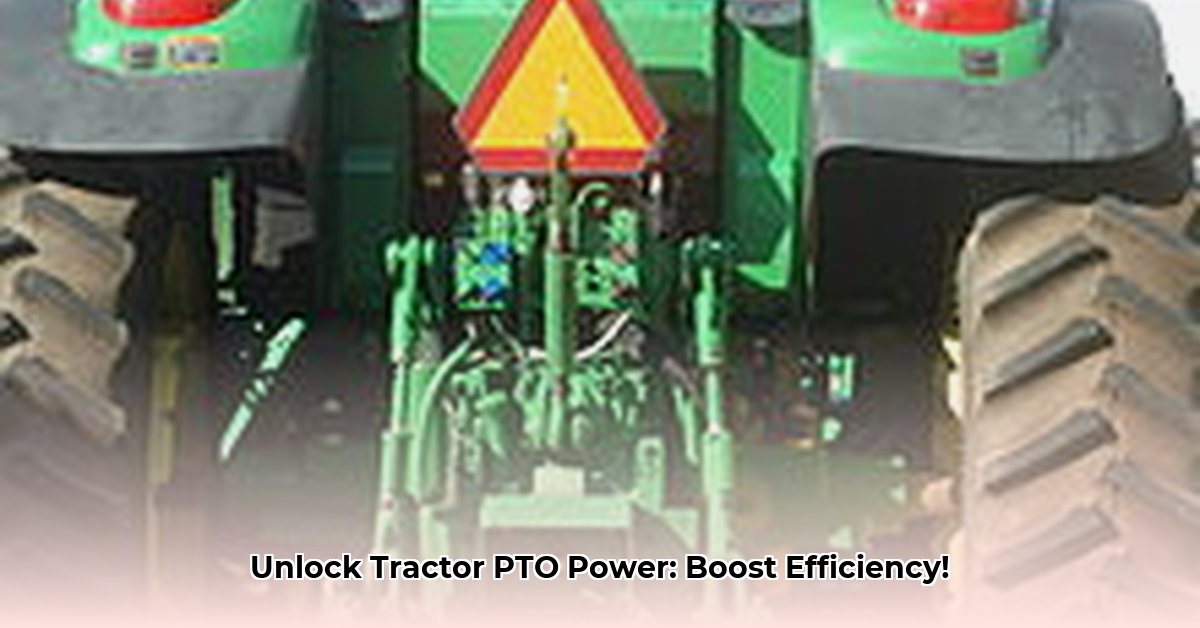
Understanding Your Tractor's Power Take-Off (PTO) System
Your tractor's Power Take-Off (PTO) system is a crucial component for efficient farming. It transfers power from your tractor's engine to various implements, like mowers, balers, and tillers. Understanding its different types, safe operation, and maintenance is essential for maximizing productivity and sustainability. Don't underestimate its impact—a well-maintained PTO directly contributes to fuel efficiency and a reduced environmental footprint. Are you maximizing the potential of your PTO system? For more on tractor implements, check out these tiller options.
Types of PTO Systems: A Comparison
Several PTO types exist, each suited for different tasks. Choosing the right one maximizes efficiency and minimizes fuel consumption.
- Transmission PTO: This basic type connects directly to the tractor's transmission. The PTO only operates when the tractor is moving. It's simple and inexpensive but lacks flexibility.
- Live PTO: This allows the PTO to operate independently of the tractor's ground speed. You can use implements while stationary. It offers increased flexibility compared to a transmission PTO.
- Independent PTO: This gives complete independence from the transmission and ground speed. Ideal for precise speed control in various applications. It provides the greatest flexibility but is usually more complex and expensive than simpler options.
- Ground Speed PTO: This system automatically adjusts the PTO speed based on the tractor's speed, often linked to a GPS system. This is beneficial for tasks needing consistent speed control, such as spraying or fertilizing, but represents a higher initial cost due to the automated control systems.
- Reverse PTO: This allows the PTO shaft to spin in reverse, a useful feature for specialized implements. However, it is not a standard feature on all tractors.
Here's a table summarizing the key differences:
| PTO Type | Advantages | Disadvantages |
|---|---|---|
| Transmission | Simple, inexpensive, easy to understand | Limited flexibility; only works when tractor moving |
| Live | More flexible; stationary operation possible | May still have limitations depending on other functions |
| Independent | Maximum flexibility; completely independent operation | More complex, potentially more expensive |
| Ground Speed PTO | Automated speed control; improved efficiency | Requires GPS and advanced control systems; higher cost |
| Reverse | Allows reverse rotation for specialized implements | Specialized use case; not standard on all tractors |
PTO Shaft Types: Ensuring Compatibility
Connecting implements to the PTO requires a PTO shaft. Crucially, shafts come in two main standards: domestic and metric. Using an incompatible shaft is extremely dangerous and can lead to catastrophic failure. Always verify compatibility between the shaft, your tractor, and the implement. A mismatched shaft is a major safety concern and can lead to significant damage.
Safe PTO Operation: Prioritize Safety
Working with a PTO system involves inherent risks. Prioritize safety at all times.
- Double-Check Disengagement: Before touching any PTO components, always ensure it's completely disengaged.
- Thorough Inspection: Inspect the PTO shaft for damage (wear, bending) before each use. Replace damaged shafts immediately.
- Slow and Steady Engagement: Engage the PTO slowly and smoothly. Avoid sudden jerks.
- Clearance: Maintain a safe distance from moving parts. Never reach into moving PTO components. Safety shields should always be in place.
- Constant Awareness: Keep a close eye on the PTO shaft during operation.
- Smooth Disengagement: Disengage the PTO smoothly after use, allowing implements to come to a complete stop before approaching them.
Maintenance and Troubleshooting: Preventative Measures
Regular maintenance is vital for a long-lasting PTO system. Lubricate the shaft according to the manufacturer's instructions and inspect all components regularly for wear and tear. Address any issues promptly to prevent further damage. Listen for unusual noises or vibrations, which often signal underlying problems. Proactive maintenance saves money and prevents costly repairs.
Choosing the Right PTO System: Tailoring to Your Needs
Selecting the appropriate PTO system depends on your specific farming operations and implements. Consider the complexity of your tasks, frequency of use, and required flexibility. A higher initial investment in a more sophisticated system often pays off in the long run through increased efficiency.
Fuel Efficiency and Sustainable Practices
Your PTO system directly affects fuel consumption. Proper maintenance, efficient operation, and matching the PTO to your needs optimize fuel use. Modern e-PTO systems can significantly reduce fuel consumption by decoupling engine speed from PTO speed. Efficient PTO operation contributes to lower fuel bills and reduced environmental impact.
Conclusion: Embrace Efficient and Sustainable Farming
Proper PTO maintenance and operation are crucial for efficient and sustainable agriculture. Prioritize safety, understand your system, and reap the benefits of a more productive and environmentally responsible operation.
Key Takeaways:
- Safety First: Always prioritize safety when operating a PTO system.
- Efficiency Matters: Understanding your PTO type and operating it correctly maximizes fuel efficiency and reduces costs.
- Preventative Maintenance: Regular maintenance prevents costly repairs and downtime.